
Most entertainment gets booked for a property. It should get booked for a room.
That’s the core mistake behind underperforming venue entertainment. A hotel or casino isn’t one venue. It’s a showroom, a lounge, a ballroom, and a set of private event spaces, and the crowd in each one arrived for a completely different reason. An act that lights up a ticketed showroom can die in a lounge. A show built for a captive gala crowd can’t hold a room where people wander in and out all night.
We’ve played across that whole range, from a corporate gala at Caesars Palace in Las Vegas to a Big Ivory Ticklers show at The Park Casino in Rapid City to a 1 Grand show at The Red Piano in St. Maarten. Different rooms, different jobs. Here’s what each one actually needs.
When entertainment is chosen at the property level, one act gets slotted into whatever space is open that night. Sometimes it fits. Often it doesn’t, and nobody can articulate why the night felt flat.
The rooms are doing different work. A showroom sells tickets. A lounge extends dwell time and drives bar sales. A ballroom serves a client’s program. A private event protects your property’s reputation with a group that will review you publicly. Entertainment that ignores those differences is entertainment that only lands by luck.
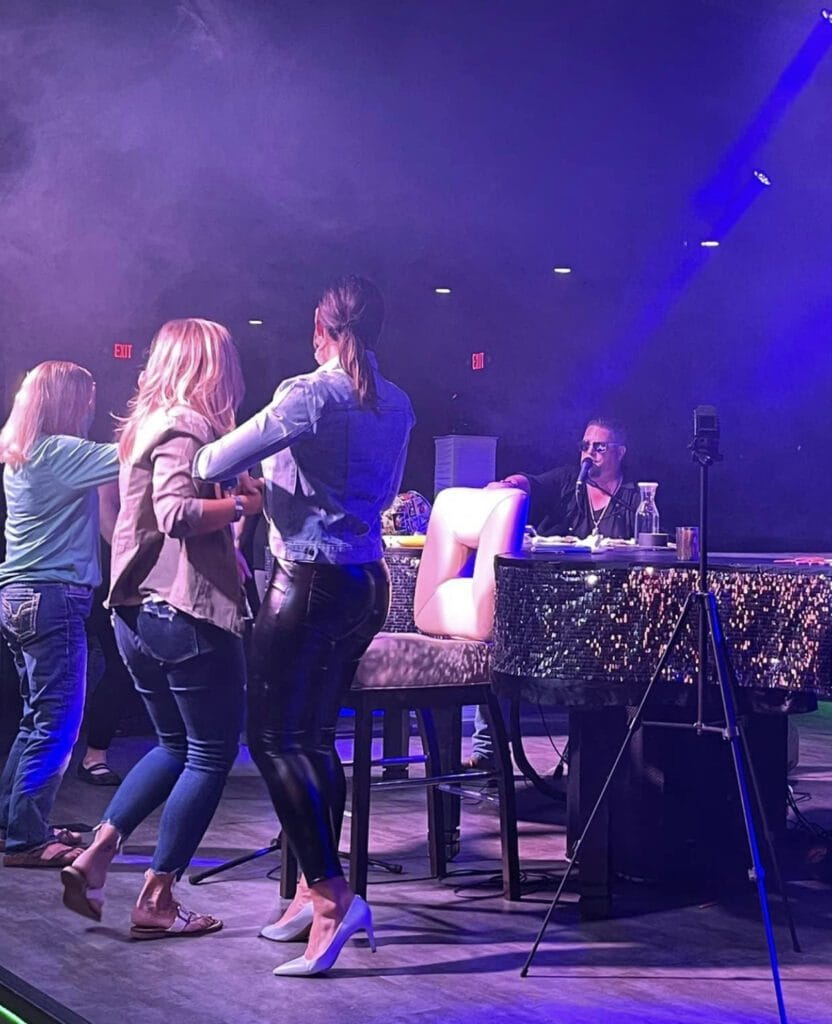
A ticketed showroom crowd is the easiest room in the building and the least forgiving. Easiest, because they bought a ticket. They want to be entertained and they’re paying attention from the first note. Least forgiving, because they paid, so “pretty good” reads as a letdown.
This room wants spectacle and craft. It can hold the biggest format you’ve got, and it rewards production value: multiple pianos, a full cast, real staging. It’s the one room where the show itself is the product rather than the backdrop, so scale up rather than down.
A lounge is the hardest room to play well, and it’s the one most often handed to the cheapest act on the calendar. The crowd didn’t come for a show. They came for a drink, and they arrive and leave in a constant rotation all night. There’s no captive audience and no shared starting point.
This room needs performers who can restart the energy repeatedly rather than build one long arc, and who can win over people who weren’t paying attention thirty seconds ago. Requests do a lot of the work here, because they give a stranger a reason to become a participant. This is also the room where dwell time is the whole business case: people stay longer, and they order more while they stay.
A gala or corporate event in your ballroom is a captive room, which sounds easy and isn’t. The crowd is there for a program, not for the band. There are speeches, a meal, an agenda, and an energy curve someone else designed.
This room needs entertainment that serves the program instead of competing with it, and performers who know the difference between a cocktail hour and the moment after the CEO speaks. The corporate galas we’ve played at Caesars Palace and The Grand America Hotel in Salt Lake City are exactly this: a room where the show has to fit inside somebody else’s run of show and still land.
Weddings and private parties inside your property are a different risk profile. The client owns the event, but your property owns the reputation. If the entertainment is loud in the wrong way, runs long, or reads as unprofessional, the review names your hotel, not the act.
This room needs performers who behave like part of your operation: on time, on schedule, respectful of the space, and calibrated to the crowd in front of them. When we played a wedding reception at The Broadmoor in Colorado Springs, the standard wasn’t just a great show. It was a great show that fit the property.
The practical upshot: one format doesn’t cover four rooms, and it shouldn’t have to. A compact single-piano setup fits a lounge or cocktail space without overwhelming it. A two-piano show handles a ballroom. A three or four piano production is built for a showroom or a big stage.
Scaling the format to the room is the single highest-leverage decision in venue entertainment, and it costs nothing to get right. It just requires deciding room by room instead of property-wide.
Four questions separate acts that work in venues from acts that only work on paper.
Ask what they change between a lounge and a showroom. If the answer is nothing, they only have one show. Ask how they handle a room that isn’t paying attention yet, because that’s the lounge problem and it’s the hardest one. Ask what they need from your property for load-in, staging, power, and sound, since an act that hasn’t asked hasn’t thought about it. And ask where they’ve actually played, then look at whether those rooms resemble yours.
Range is the whole argument here, so it’s worth being specific. Caesars Palace and The Grand America Hotel for corporate galas. The Park Casino in Rapid City. The Red Piano in St. Maarten. The Broadmoor in Colorado Springs. Johnny Foley’s in San Francisco. Ticketed shows, hotel ballrooms, casino rooms, resort lounges, and stages as large as Mile High.
If you’re programming a room and want an act that adjusts to it rather than the other way around, let’s talk.